
New US Flag Design: 51-Star Proposals and How a Redesign Happens
A new US flag design mostly means a 51-star canton. See the star arrangements that fit 51, the ratio and color rules the flag follows, and who can change it.
By the Flag Maker team
A new US flag design almost always means one thing: a different number of stars in the blue canton. The thirteen stripes, the red and white order and the blue union are set by federal law, so a 51-star flag is a rearrangement of the star field rather than a fresh drawing.
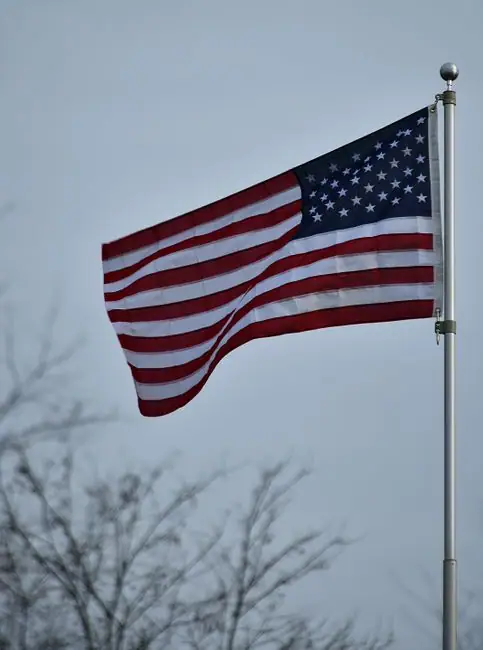
That is why statehood talk sends people looking for this. If Puerto Rico or the District of Columbia were admitted, the flag would gain a star and everything else would stay where it is.
Redrawing the star field is also a useful exercise if you are learning the five rules of good flag design, because the canton is the fussiest part of the flag to get right.
Why people keep proposing a new US flag design
Three reasons come up again and again.
Statehood is the first. The 51st state question has been argued over for decades, and every round of it produces fresh 51-star mockups.
The second is design taste. Fifty small stars pack a lot of detail into one corner, and many designers argue that a flag you can draw from memory would use fewer, larger shapes.
The third is permanence. A flag tied to the state count has to be reworked every time the country grows, so some proposals try to break that link for good.
The 51-star problem and how the star field gets arranged
Fifty stars fit the canton well because fifty splits into nine rows that alternate six and five. The spacing comes out even with no leftover gaps. Fifty-one is harder, since it only divides by three and seventeen.
| Stars | Arrangement used |
|---|---|
| 48 | Six rows of eight, a plain grid |
| 49 | Seven rows of seven, a square grid |
| 50 | Nine rows alternating six and five |
| 51 | Six rows alternating nine and eight, in most proposals |
The nine and eight layout is the common answer. Six rows, starting and ending with nine, keeps the staggered rhythm people already recognize. The stars end up slightly larger than today’s, because there are fewer rows to stack.
Three rows of seventeen also totals 51, but a wide grid of tiny stars looks like a spreadsheet. Ring and spiral layouts solve the math and lose the familiar look.
What happened the last two times stars were added
Alaska brought the 49th star, and the field switched from six rows of eight to a straight seven by seven grid. That flag flew for only a single year. Hawaii brought the 50th star, and the field changed again to the nine-row staggered pattern still in use.
So the precedent is clear. One new state, one new star, and a redrawn grid rather than a redesigned flag.
Rules the current flag already follows
The design is not a matter of opinion. Federal law describes the flag of the United States as thirteen horizontal stripes, alternating red and white, with a union of fifty white stars on a blue field. A separate section of the code says one star is added for each new state, effective the Fourth of July after admission.
Stripes are capped at thirteen on purpose. The flag once carried fifteen stripes, and Congress went back to thirteen in the Flag Act of 1818 once it was obvious that adding a stripe per state would not scale.
Ratio and the canton
Executive Order 10834 fixes the geometry. The hoist is 1.0 and the fly is 1.9, giving a 1:1.9 ratio that is longer than the 3 by 5 flags sold in stores. The order also sets star diameter and row spacing as fractions of the hoist. If you want the background on why these numbers matter, see the guide to flag ratios and what they do to a design.
The canton covers seven of the thirteen stripes and about 0.76 of the hoist in length. Put it in the upper corner nearest the pole, which is the part of a flag that stays flat and visible when the wind drops.
Colors
The official colors are Old Glory Red, white and Old Glory Blue, matched to a standard color reference rather than to a screen value. Any version you design should keep the same three, since those shades are a large part of what makes the flag read as American. Red, white and blue carry common meanings across many flags, which is another reason proposals rarely touch them.
Notable redesign proposals and what each one changes
Most serious proposals fall into four groups.
- Star count only. A 51-star or 52-star canton, same stripes, same colors. The least disruptive option and the most likely one.
- Fewer, larger stars. Instead of one star per state, a single large star or a small cluster becomes the charge. This fixes the simplicity problem and ends the redraw cycle, but it drops the one-star-per-state idea people are attached to.
- Historical revivals. The Great Star pattern arranged the stars into one big star shape. Ring layouts echo early flags. Both are striking and both lose the orderly grid.
- Full rework. New layouts, new symbols, sometimes new colors. These show up in design contests and go nowhere politically, though they are worth studying alongside the best and worst designed flags.
Who can actually change the flag, and how
There is no public vote and no design competition. The process is short.
Congress sets the stripes, the colors and the one-star-per-state rule in statute, so changing any of those takes an act of Congress. Adding a state triggers the extra star by itself, with no new law needed.
The President then signs an executive order laying out the arrangement and the exact proportions. That is how the 50-star field was specified. A 51-star flag would follow the same route.
Why flag designs sometimes cause controversy
A flag stands for a group’s identity, so changing the picture reads as changing what the group means. That is the whole fight, every time.

State flags show it clearly. Mississippi retired its old flag and adopted a magnolia design after a statewide vote. Georgia changed its flag twice within a few years. New Zealand ran a national referendum on a new flag and voters chose to keep the one they had.
There is also a gap between design advice and public taste. Designers want simple shapes and no lettering, while the public often wants the seal, the motto and the full list of symbols included. Knowing what makes a good flag does not settle an argument about heritage.
Designing your own version of the US flag
Start with the stripes. Thirteen bands of equal height, red at the top and bottom.
Build the canton next, seven stripes tall, and block it in before you place a single star. Decide the row pattern on paper first, then space the stars with equal margins on all four sides.
Shrink the result to about an inch wide. If the stars blur into a smear, use fewer and make them bigger. Check it in grayscale too, since red and blue can read the same when the color is stripped out.
Label your file as a proposal. A redesign is a design study, not a replacement for the flag on the pole.
Build it in the flag maker
Flag Maker Online runs free in the browser, with no sign-up. Open the editor on the home page, set the ratio, lay in the stripes, then drop your star grid into the canton and export a PNG or SVG when the layout looks right.

Frequently asked questions
How many stars go in each row of a 51-star flag?
Most 51-star proposals use six rows that alternate nine stars and eight, starting and ending with a row of nine. That adds up to 51 and keeps the staggered look of the current field. Three rows of seventeen also adds up, but it reads like a chart rather than a flag. The canton keeps the same shape either way.
Is it legal to design your own version of the American flag?
Yes. Drawing an alternative design is protected expression, and the US Flag Code sets etiquette for displaying the official flag rather than banning other artwork. Your version simply is not the national flag, so it carries no official standing. Print it, post it or hang it at home, and label it clearly as a proposal so nobody is confused.
Would a 51st star be added automatically if a new state joined?
Yes. Federal law says one star is added for each new state, and the change takes effect on the Fourth of July following admission. The star count is automatic. The pattern is not, so the President would sign an executive order setting out how many rows there are, where the stars sit and how big each one is.
What proportions does the official US flag use?
The executive order governing the flag sets the hoist at 1.0 and the fly at 1.9, so the official ratio is 1:1.9. The blue canton is seven thirteenths of the hoist tall and about 0.76 of the hoist long. Flags sold for homes are usually 3 by 5 feet, which is a slightly squarer 1:1.67.