
Flag Band Maker: Designing Color Guard and Marching Band Flags
Use a flag band maker to design a color guard or marching band silk: sizes, contrast that reads from the stands, and how to get it printed on poly silk.
By the Flag Maker team
A flag band maker is a flag design editor for building a color guard or marching band silk and exporting artwork a printer can use. Flag design for marching band follows different rules than a flag on a pole, because a guard silk spins, sails and folds while people watch it from a hundred feet away. Fewer shapes, bigger shapes, harder contrast. That is most of the job.
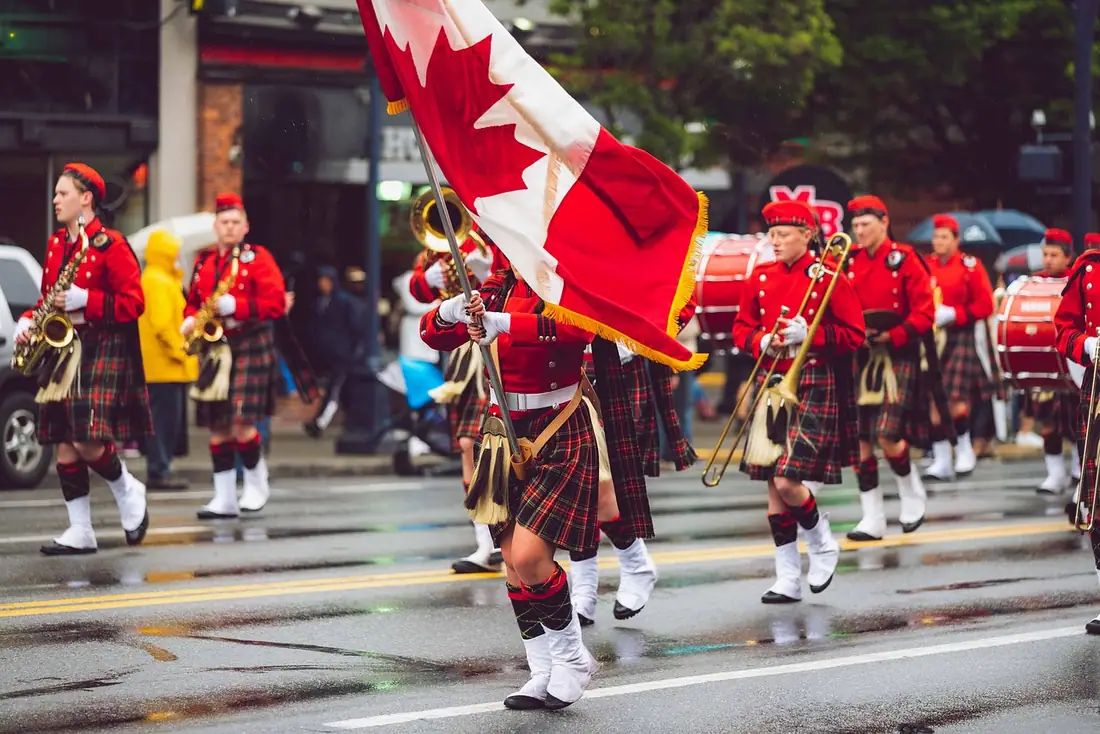
What a color guard flag has to do that a national flag does not
A flag on a pole is read flat, from the front, standing still. A color guard) silk is read while it spins, during a toss above the performer’s head, wrapped around the pole, and often from seating that looks down on the field.
Three differences follow from that.
Motion eats detail. A shape that needs a full second of steady viewing never gets that second.
Distance eats size. From the back of the stands a 36 inch silk fills a small part of your view, so anything smaller than a hand span on the flag is gone.
The silk repeats. Twelve identical flags move as one block, so a plain design multiplied across the line often looks stronger than a clever one seen alone.
The rules behind a good flag design still apply here. Guard work just pushes them harder.
Flag silk sizes used in marching band and color guard
Sizes come from the supplier, not from a standard, so pull the spec sheet before you draw anything. The common ranges look like this.
| Flag type | Typical size | What it is for |
|---|---|---|
| Full size silk | about 36 by 50 to 36 by 60 inches | main field work on a pole around 5.5 to 6 feet |
| Swing flag | roughly 18 by 24 to 24 by 36 inches | carried in pairs, one in each hand |
| Parade flag or banner | 3 by 5 feet and up | street parades and band banners |
A 36 by 50 inch silk is much closer to square than a 3 by 5 foot flag. A design drawn on 3:5 proportions looks squeezed once it moves onto a silk, so set the canvas to the real size before you start.
Designs that read from the stands
Scale: shrink the preview before you commit
Scale the design down until it is about an inch wide on screen. That is roughly what the back row sees. Whatever vanishes at that size is weight you pay to print and nobody ever sees.
Thin outlines go first. So do small logos, taglines, drop shadows and gradients that fade into each other.
Contrast carries further than color
Value contrast, light against dark, is what survives distance. Two mid tone colors of equal brightness blur into one flag at fifty yards even when they look clearly different on your monitor.
Convert the design to greyscale and look again. If the shapes disappear, pick a lighter light or a darker dark.
Poly silk also lights up when the sun sits behind it, which lifts pale colors and thins weak contrast even more.
Lines that show the spin
A circle centered on the field looks the same at every angle, so it hides rotation. Diagonals, spirals and off center shapes do the opposite. They tell the audience the flag is turning.
Asymmetry helps judges see matched, clean work across the whole line.
Matching the flag to the show theme and the uniforms
Pull two or three colors from the uniform, then add one color the uniform does not contain. Without that accent the silk blends into the performer and stops reading as a separate object.
Keep the theme recognizable. Abstract color field work is normal in winter guard programs, while a competitive field show usually wants shapes tied to the music.
If the show tells a story, write the meaning down before you design. Choosing symbols and colors that mean something works the same way for a show silk as it does for a family flag.
Striped layouts are worth a look when a line needs several matching silks. Stripe order and proportion do a lot of work with very few shapes.
Drum and lyre and parade flag designs
Parade flags are a different viewing problem. A marching band on a street is seen from ten or twenty feet away, at eye level, passing in a few seconds.
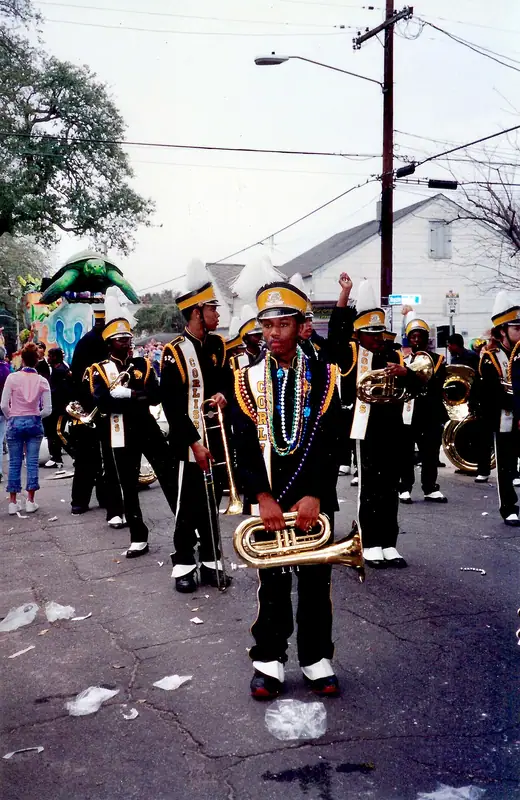
Close viewing means a band name, a school crest or a year still reads on a parade flag, which would be wasted on a field silk.
Side on viewing means both faces get seen, so print both sides.
Drum and lyre units carry and spin while marching forward, so the flag spends most of its time in front of the body. Keep the lower third clean, because the player and the instrument block it.
School and youth programs often let students design the silk. The limits that make a classroom flag activity work, three colors and no words, are the same limits that make a field flag read.
Getting a band flag printed on poly silk
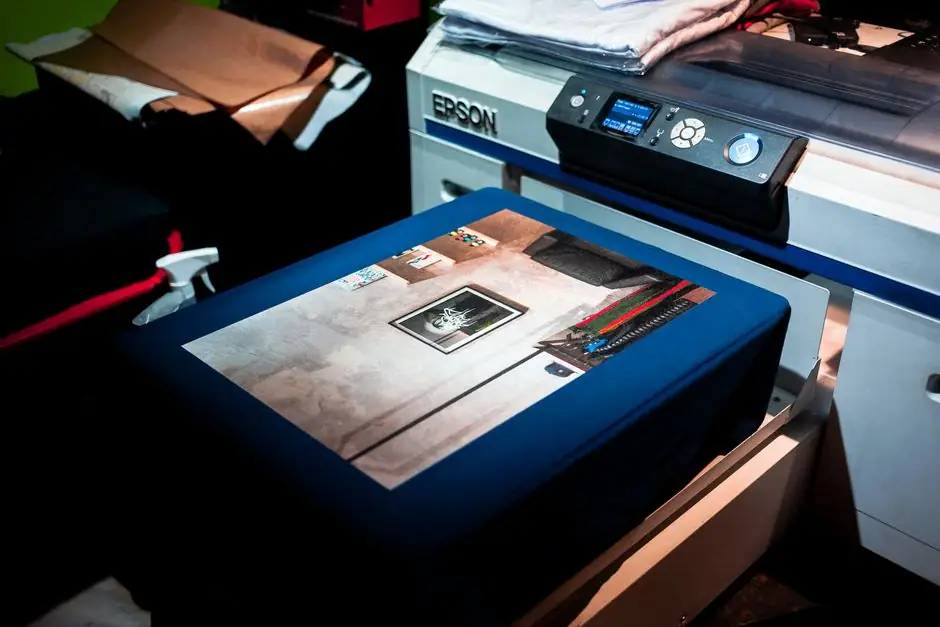
Poly silk is a thin woven polyester printed by dye sublimation, where heat turns ink into gas and bonds it into the fiber. The color goes into the cloth instead of sitting on top, so it does not crack when the flag is folded or crushed in a bag.
Compare it with the alternatives in the guide to flag fabric and materials if you also need a banner or an outdoor flag.
File notes for the printer:
- Work at the finished size. A 36 by 50 inch silk at 150 pixels per inch is 5400 by 7500 pixels.
- Vector art prints sharpest, since it scales without blurring.
- Add bleed and leave a hem allowance on the pole edge. A few inches of artwork disappear into the sleeve.
- Ask whether the reverse is mirrored, then fix any lettering before you approve the proof.
The steps for getting a design printed are the same ones a 3 by 5 flag order goes through, with a different size and fabric.
Design the silk in the flag maker
Set the canvas to your silk size, block in the field, add two or three large shapes, then shrink the preview to an inch wide and see what is left. The free flag maker on the FlagMakerOnline home page does all of that in the browser and exports a PNG or SVG you can hand to a printer.
Frequently asked questions
How many flags does a color guard need for one show?
Most guards carry one silk per performer for the main design, plus spares for damage, so a line of twelve usually orders fourteen or more. Many shows also use a second or third silk that changes partway through, which multiplies the count. Order the spares in the first run, since a later reprint can shift slightly in color.
Can I design a marching band flag myself?
Yes. Build the artwork in a flag design editor, hold it to two or three colors and a few large shapes, then send the file to a printer that does dye sublimation on poly silk. Directors do this often, because stock catalog designs rarely match a show theme. Ask the printer for their template and pole hem allowance before you start drawing.
What fabric are color guard flags made of?
Poly silk, a light woven polyester, is the usual choice. It is thin enough to sail on a toss, it holds dye sublimation ink well, and sunlight passes through it so the color glows on an open field. Heavier knits and satins exist for slower work and for banners, where weight and drape matter more than flight.
Should a band flag be printed on one side or both?
Single ply printing puts the design on one face and mirrors it on the back, which is fine for most field work because the silk turns constantly. Any text or number reads backwards on the mirrored side. Parade units seen by crowds standing on both sides of a street, and any design with lettering, are better ordered double sided.