
Flag Maker for DnD: House, Faction and Guild Banners
Use a flag maker for DnD to build house, faction and guild banners that follow real heraldic rules: one charge, two colors, shapes beyond the rectangle.
By the Flag Maker team
A flag maker for DnD is a free browser tool for designing house, faction and guild banners for a tabletop game. Pick a field color, drop one bold symbol on top, export the image, and you have a prop for a handout, a map or a token.
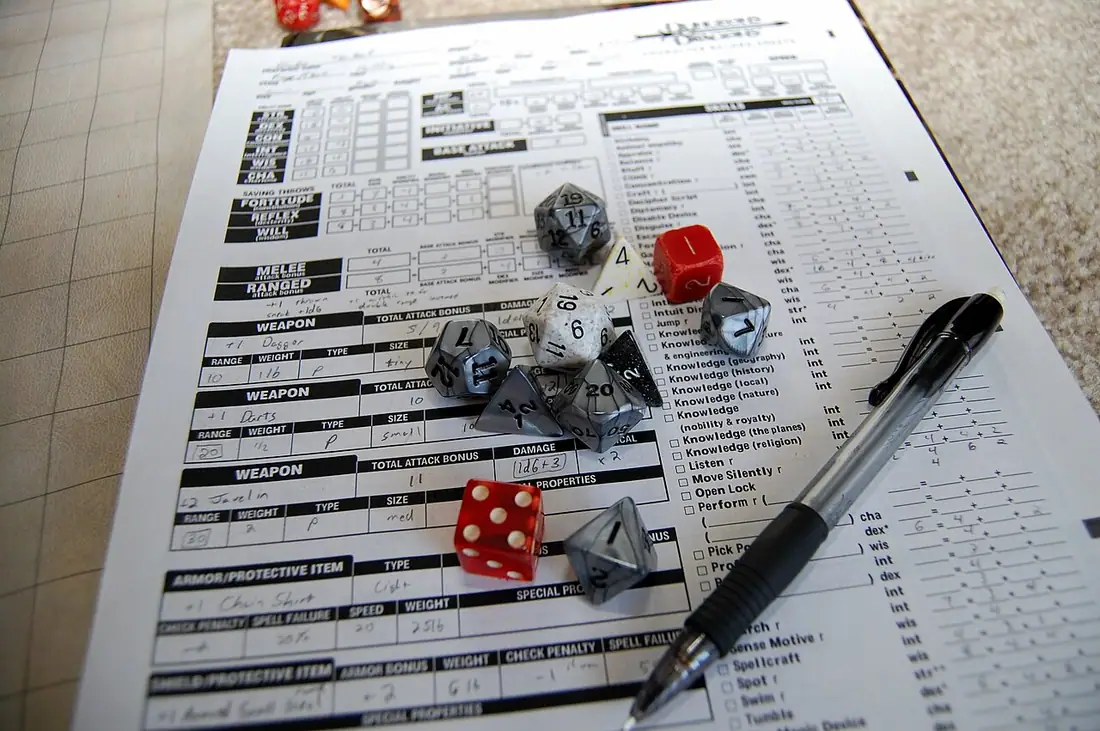
What makes a fantasy banner convincing is not the art. It is heraldic logic: one clear symbol, two or three colors, strong contrast, and a shape that matches whoever carries it.
This guide covers the part a national flag guide skips. Banners in a campaign belong to families, armies, temples and trade guilds, and each of those groups signals itself in a different way.
House, faction and guild banners compared
A house banner marks a bloodline. A faction banner marks a cause. A guild banner marks a trade. The editor is the same for all three. The symbol and the shape are what change.
| Banner type | Stands for | Usual symbol | Common shape |
|---|---|---|---|
| House | a family or noble line | animal, mythic beast, crown | square or 2:3 rectangle |
| Faction | an army, cause or cult | sun, eye, weapon, broken chain | rectangle or gonfalon |
| Guild | a craft or trade | the tool of the trade | pennant or swallowtail |
| Order | a vow or faith | cross, star, key | square or swallowtail |
Pick the row before you pick the color. A guild of ratcatchers and a crusading order should not end up with the same design.
Borrowing from heraldry without copying it
European heraldry began as a battlefield identification system. A knight in a closed helmet is anonymous, so the shield had to say who he was from a long way off. That is the same problem a banner on your map solves.
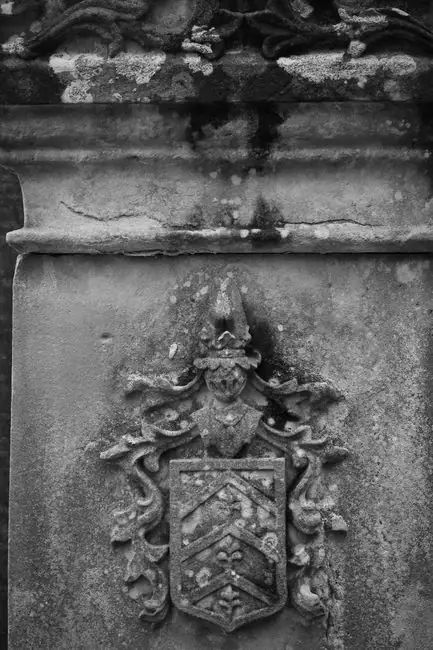
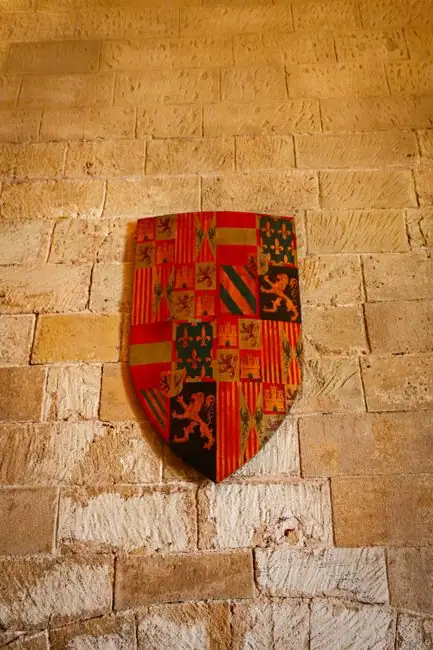
Two habits are worth stealing.
The first is the rule of tincture: put a metal on a color or a color on a metal, and avoid metal on metal or color on color. The metals are gold (yellow) and silver (white). The colors are red, blue, green, black and purple. A gold lion on red works. A red lion on green goes muddy.
The second is restraint. Old arms carry one or two symbols, not a scene.
Keep the shield and the flag separate jobs. A coat of arms is the full package of shield, helm, crest and motto, and it is drawn for parchment. A banner takes the shield’s field and main symbol and nothing else. Scrolls and mottos do not survive wind or distance.
If you want the full arms somewhere, put it on the player handout and keep the banner simple.
Picking a creature, object or symbol
The thing sitting on the field is called a charge. One per banner is plenty.
Three ways to choose one:
- A creature for a house. Lion, bear, raven, wyvern, boar. Silhouettes beat illustrations, because a solid shape still reads when it is tiny.
- An object for a guild. The tool of the trade: hammer, key, quill, anchor, sheaf, cup.
- An abstract mark for a faction or faith. Sun, star, eye, cross, crescent, chain.
Then shrink the design on screen until it is about an inch wide. Whatever disappears was decoration. Thin outlines, gradients and small text go first.
Leave words off. Nobody reads lettering on fabric from fifty feet, and a banner covered in a motto reads as a poster instead.
Color codes that signal allegiance
Give each major power two colors and hold the line. Once your players learn that black and gold means the royal house, every black and gold banner on the map does work for you with no explanation.
A quick way to assign them:
- Royal or noble house: a metal plus one deep color, like gold on purple or silver on black
- Military faction: red, black or steel grey
- Temple or order: white plus one color
- Merchant guild: green, brown, or the color of the goods it trades
- Rebels: the palette they broke away from, with one element inverted
None of that is a real world rule. Color meaning shifts between cultures, and what flag colors mean differs from one country to the next. Inside your setting you decide, as long as you stay consistent.
Shapes beyond the rectangle: pennants and gonfalons
A plain rectangle reads as a nation. To make your own medieval flag, start with the shape, because the outline carries information on its own.
A square banner is the classic knight’s banner, flown by someone entitled to lead troops into the field.
A pennant is a long triangle. It suits a lance, a ship’s masthead or a shop sign hanging over a street.
A swallowtail cuts a V out of the loose edge and looks older than a straight hem.
A gonfalon hangs from a crossbar and ends in two or three tails. Italian cities and churches used them, so it reads as civic or holy rather than military.
Mixing shapes across a set also helps players tell factions apart at a glance on a battle map.
How do I make a set of flags that look related?
Pick one element to hold constant and one to vary. Real countries borrow from each other to show history, and a worldbuilder can do it on purpose.
Shared layout, different symbol: five houses all use a square with one centered beast. Shared symbol, different field: a kingdom and its three vassals all carry the same star on different colors. Parent and breakaway: the rebel province keeps the old layout and swaps a single color.
That method is the same one behind national flags, so how to make a flag for a fictional country is the next read if your campaign has nations as well as houses. The short answer on fictional country flags covers the basics in a paragraph.
Learn the vocabulary too. The hoist is the pole edge, the fly is the loose edge, the canton is the upper corner next to the pole. Parts of a flag has a diagram. Keep important detail toward the hoist or the center, since the fly end flutters and hides things.
Build your banners in the Flag Maker
The Flag Maker runs in your browser and is free. Set the shape and ratio, choose a field color, add one symbol, check the contrast, then export a PNG for your handout or map. Do the ruling house first and build the vassals from it.
Frequently asked questions
What is the best flag maker for DnD?
The best one for a campaign is whatever lets you work fast and export clean. You want flat solid colors, a set of simple symbols, standard flag ratios, custom shapes like pennants and swallowtails, and a PNG export big enough for a printed handout. Free and browser based helps too, because you will make a dozen banners in one sitting.
How do I make my own medieval flag?
Start with one field color, then add a single symbol on top, such as a beast, a tool or a star. Follow the old heraldic contrast habit: light symbol on a dark field, dark symbol on a light field. Keep words off it. Medieval banners had to be read from horseback at distance, so two colors and one bold shape is the whole recipe.
Can I use a real coat of arms in my campaign?
For a private game at your own table, copying a historical arms is low risk, and many are centuries old. Living families, cities and countries still use theirs, though, and some are protected by law. If you plan to publish or sell your setting, change the colors and swap the main symbol so the design becomes yours.
What shape should a fantasy banner be?
Rectangles in 2:3 or 3:5 read as national flags. Squares feel like a knight's banner and suit house arms. A long tapering pennant works for a lance, a ship or a guild sign over a street. A gonfalon, which hangs from a crossbar and ends in tails, reads as a temple or city banner. Match the shape to who carries it.