
Flag maker pride flags: stripe meanings and how to make your own
Flag maker pride flags, explained: what each stripe color means in the rainbow and trans flags, and how to design your own stripe flag free in minutes.
By the Flag Maker team
A flag maker makes pride flags easy because almost every pride flag is built the same way: flat horizontal stripes, a small number of colors, one meaning per stripe. Pick a stripe count, choose the colors, set them in equal bands across the field, and you have a finished design in a few minutes.
This guide covers both halves of the question. What the stripes in the well known pride flags stand for, and how to design your own stripe flag so it still reads from across a park.
Why pride flags use stripes
Stripes are the easiest design to draw from memory and the easiest to describe out loud. “Five stripes: light blue, pink, white, pink, light blue” is enough for anyone to redraw the transgender flag correctly.
Stripes also hold several ideas at once without crowding. Each band carries one meaning, so a flag can say five things with five shapes. A single charge in the middle has to carry the whole message in one picture, and it takes real drawing skill to pull off.
They survive scaling too. The same bands read on a hand flag, a pin, a phone wallpaper and a thirty foot banner.
How stripe counts and widths get chosen
Most pride flags use three to eight equal horizontal stripes. Odd counts give you a middle stripe, and that middle band becomes the focus of the flag, which is why white or a pale color often sits there. Even counts read as two halves meeting in the middle.
Equal widths are the standard. If you want one color to dominate, it is usually cleaner to make it the field and run thin stripes across it than to stretch one band to triple width.
A thin stripe placed between two similar colors to keep them apart is called fimbriation. It is the usual fix when two blues or two pinks end up side by side.
Then set the shape. 3:2 and 5:3 are the common printed proportions, and 3 by 5 feet is the usual flag size in the United States. Flag ratios goes through which one to pick and why stripes look different on a short flag than on a long one.
Pride flag proportions
Pride flags have no official proportions. No authority sets them, so makers use the standard printed shapes, 3:2 and 5:3, with every stripe the same width. The 3 by 5 foot flag is the usual size in the United States.
- Six equal stripes on a 3 by 5 foot flag give each band 6 inches of the 36 inch hoist. Five stripes, as on the transgender flag, give 7.2 inches each.
- National flags work differently. Their ratios are set in law, which is why 2:3 and 1:2 dominate that list and pride flags do not have one fixed number.
- Equal widths are the standard. If you want one color to dominate, make it the field and run thin stripes across it rather than stretching one band.
Color meanings in well known pride flags
The rainbow flag
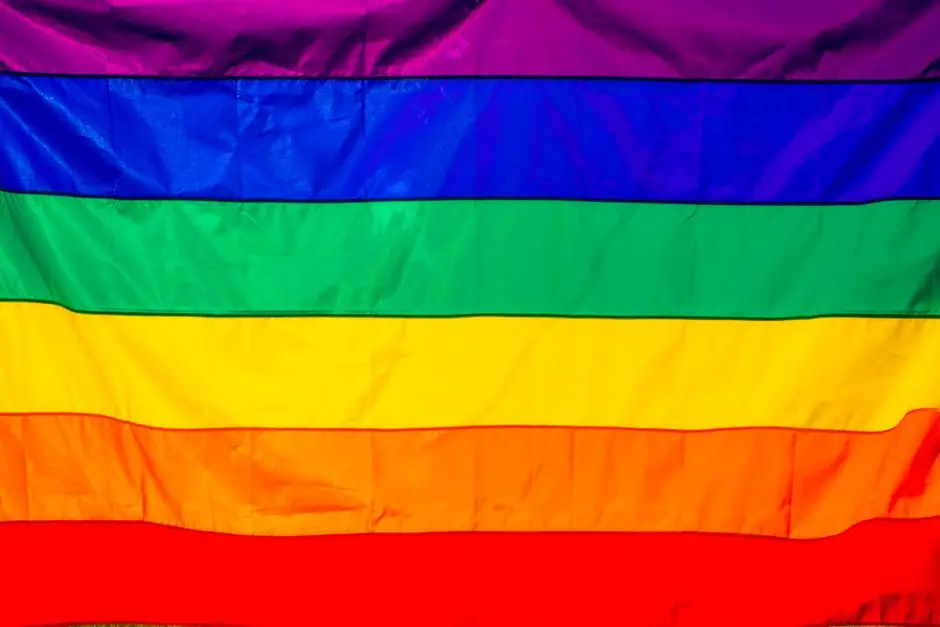
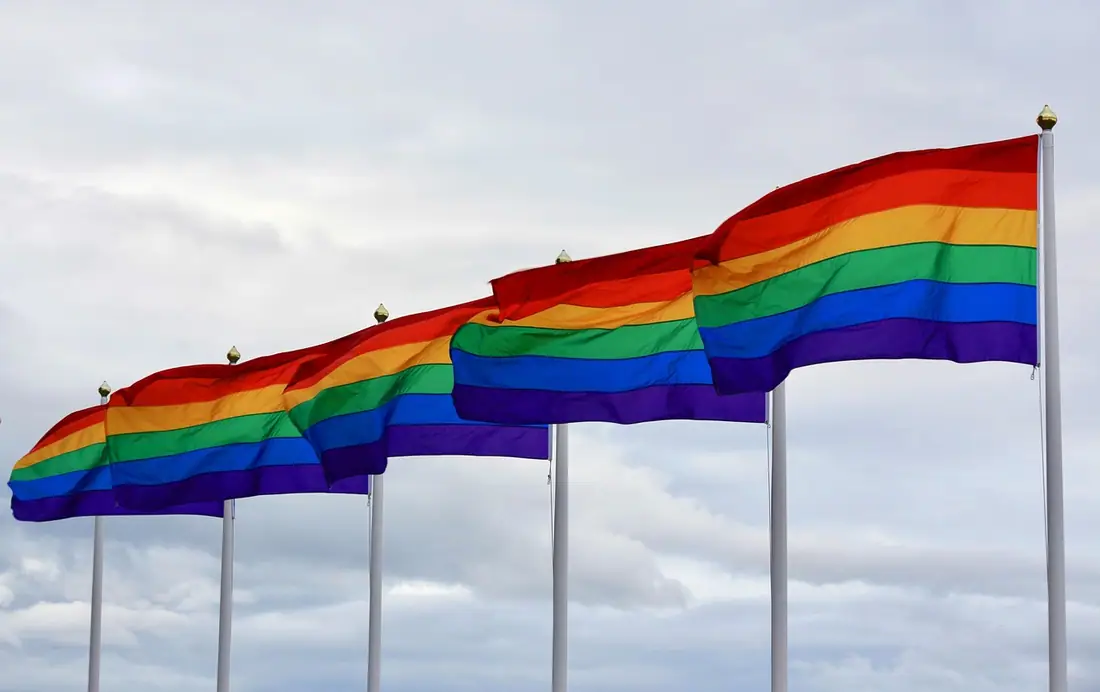
Gilbert Baker designed it with eight stripes and gave each one a meaning: pink for sex, red for life, orange for healing, yellow for sunlight, green for nature, turquoise for magic and art, indigo for serenity, violet for spirit. The version flown today has six stripes, dropping pink and turquoise, with blue in place of indigo. Wikipedia’s article on the rainbow flag tracks how the design changed.
The transgender flag
Five stripes: light blue, pink, white, pink, light blue. Monica Helms, who designed it, described the blue and pink as the traditional colors for boys and girls, with the white stripe for people who are transitioning, who are intersex, or who see their gender as neutral. The layout is symmetrical, so there is no upside down version of it.
Bisexual, pansexual, asexual and nonbinary flags
These follow the same logic with fewer stripes. The bisexual flag is pink, purple and blue. The pansexual flag is pink, yellow and blue. The asexual flag is black, grey, white and purple. The nonbinary flag is yellow, white, purple and black. Wikipedia keeps a broad list of pride flags with the meanings their designers stated.
The Progress Pride flag
This one takes the six stripe rainbow and adds a chevron at the hoist edge pointing toward the fly, in black, brown, light blue, pink and white. It is a useful example of how to extend an existing flag without touching its stripes.
If you are choosing colors for something new and want a starting point, what flag colors mean covers what red, white, blue, green and the rest have traditionally stood for.
How to design your own pride flag, step by step
- Write the meanings first. List three to six things the flag has to stand for, in plain words. The design follows the list, not the other way round.
- Give each item one color. If two items want the same color, combine them or cut one.
- Keep the count low. Three to five stripes is the sweet spot. Six works if the colors are clearly different from each other.
- Order them for contrast. Squint at each pair of neighbours. If the line between them disappears, swap them or separate them with a pale band.
- Set equal widths on a 3:2 or 5:3 rectangle.
- Check it against flags that already exist. Simple three band combinations are nearly all taken, by countries and by existing pride flags.
- Write the key down. One sentence per stripe. A flag nobody can explain is just a pattern.
That last step is the one people skip. The tight limits that make a flag design activity for kids produce real flags work the same way here: fewer colors, bigger shapes, a stated reason for each one.
Adding a symbol without crowding the stripes
A symbol works on a stripe flag when it has room. Three ways to give it room:
- Put it on the middle stripe of an odd count flag, sized to sit inside that band with clear space above and below.
- Place it in the upper corner next to the pole, the canton, and leave the stripes alone.
- Replace the hoist end with a solid triangle or chevron and put the symbol there.
One symbol, solid shapes, no hairlines, no text. If you are importing a mark or a photo instead of drawing one, adding a logo or photo to a flag covers resolution and placement.
Designing a flag for a xenogender or an identity with no flag yet
Many identity flags, xenogender ones included, are made by individuals and shared online rather than set by any authority. There is no approval step, so the only real test is whether other people can recognize your flag and redraw it.
Two practical rules. Keep the stripe count under six so the flag fits in one spoken sentence. And if the identity is tied to a specific image, use it as a color source rather than a picture: pull two or three shades from it, or flatten it to a single silhouette on one band.
Does it read at a distance and in a crowd
Shrink your design on screen until it is about an inch wide. That is roughly a flag seen from across a street. Anything you cannot make out there will not exist in person either.
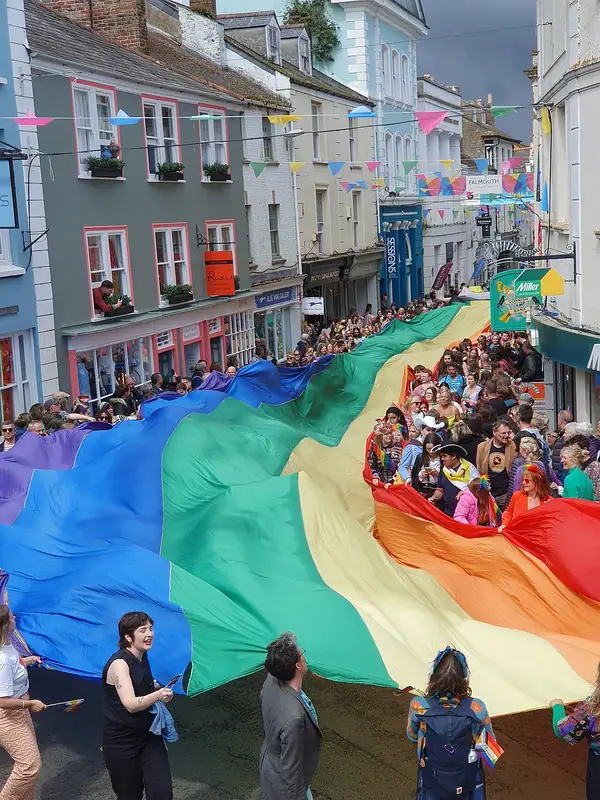
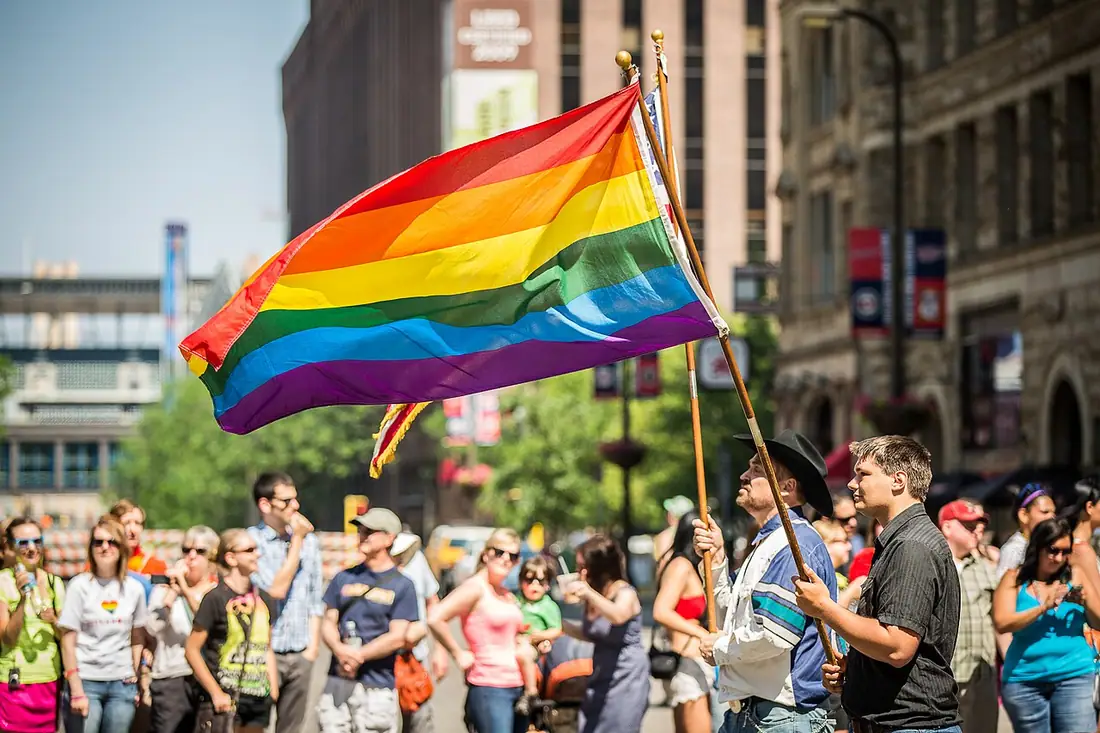
Then check the crowd case, which is specific to pride flags. Yours will fly beside dozens of others, mostly moving, often half folded. Ask whether one visible strip of your flag still identifies it. Flags with an unusual color pair, a strong light and dark rhythm, or a distinct hoist shape pass that test. A slight recolor of a common flag does not.
Fabric softens everything as well. Colors sit duller than on a monitor and backlight washes out pale stripes, so keep at least one dark band in the design. If you want a physical one, printing a flag you design explains what a printer needs from you.
Make your flag in Flag Maker Online
Flag Maker Online is free and runs in the browser. Set the ratio, stack your stripes, type in exact color values, add a symbol if the design calls for one, and export the file for a wallpaper, a print or a banner.
Frequently asked questions
Can I use a flag maker to design a pride flag?
Yes. Pride flags are stripe flags, which is the simplest thing a flag design editor can build. Set the ratio, add three to six horizontal bands, type in the exact color values you want, and export. The work is in choosing the colors and their order, not in the drawing, so most people finish a first version in a few minutes.
What do the rainbow flag colors mean?
Gilbert Baker's original rainbow flag had eight stripes with a meaning for each: pink for sex, red for life, orange for healing, yellow for sunlight, green for nature, turquoise for magic and art, indigo for serenity, violet for spirit. The widely flown six stripe version drops pink and turquoise and uses blue in place of indigo.
How many stripes should a pride flag have?
Three to six works best. Odd counts give you a middle stripe that acts as the focus of the design, which is why a white or pale band often sits there. Even counts read as paired halves. Past six, colors start repeating in tone and the flag gets hard to describe or redraw from memory. Equal widths are standard.
How do I make my own LGBT or sexuality flag?
Start with meaning, not color. Write down three to five things the flag stands for, give each one a color, order them so no two similar tones touch, and set them as equal stripes on a 3:2 or 5:3 rectangle. Then compare it against flags that exist, since most simple three band combinations are already taken.
How do I design a xenogender flag?
The same way as any stripe flag, with one extra step. Xenogender flags often tie to a specific image, such as an animal, plant or object. Resist drawing that image in detail. Pull two or three colors out of it instead, or flatten it to one solid silhouette on a single band, and keep the stripe count low.